
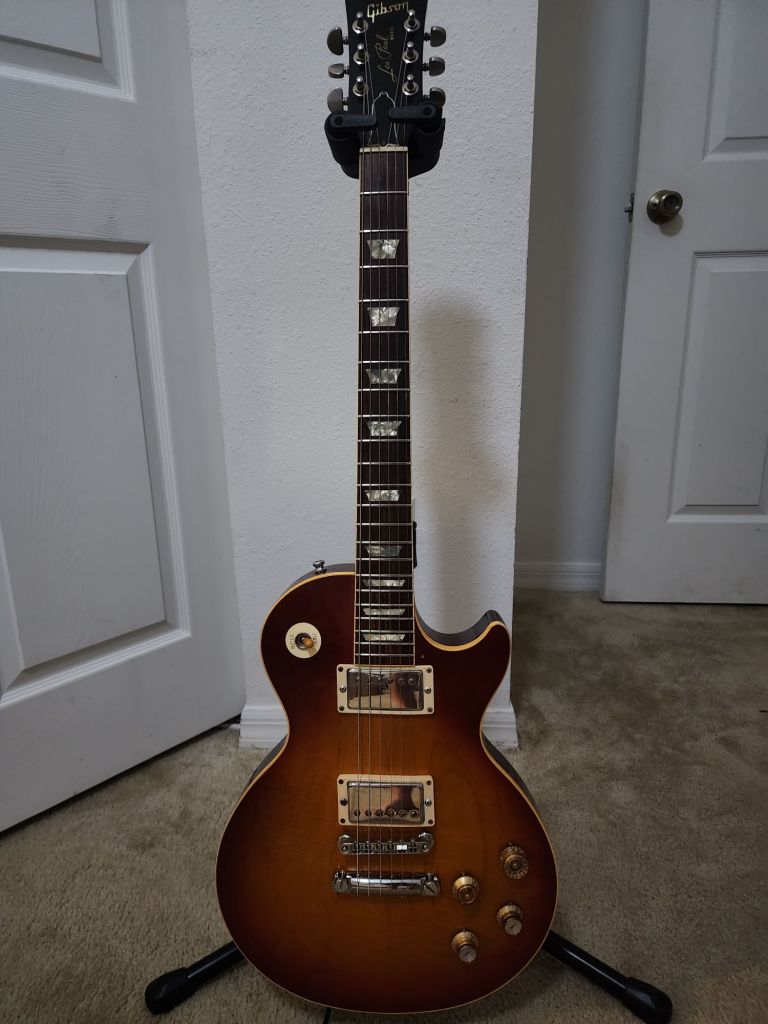
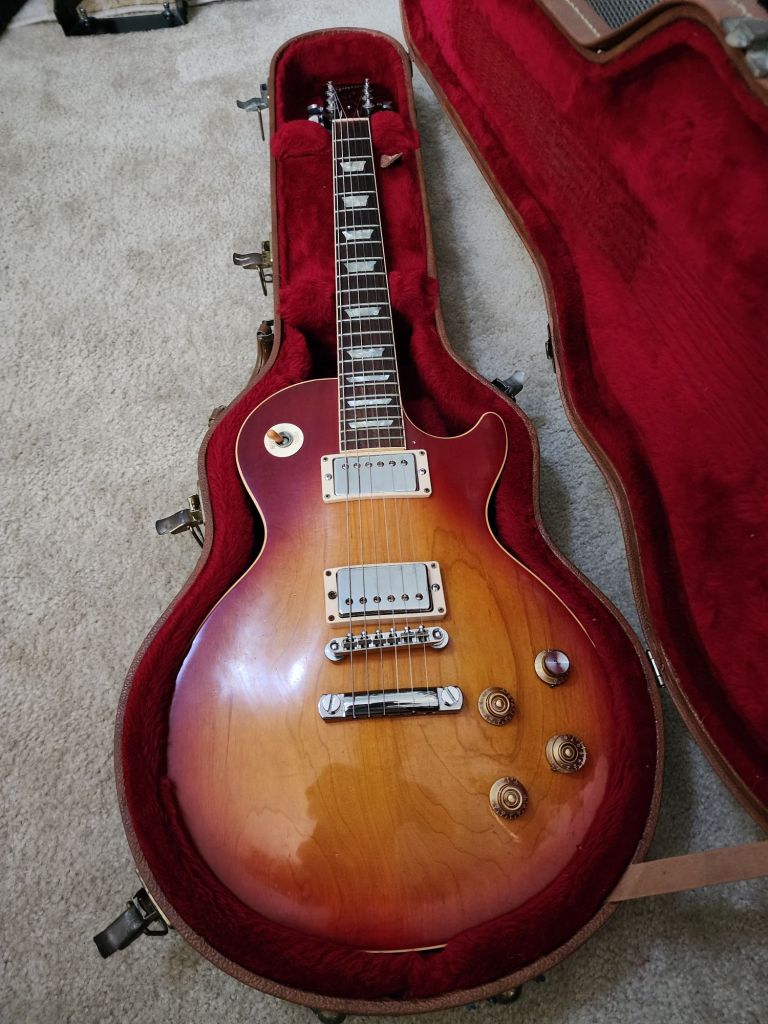
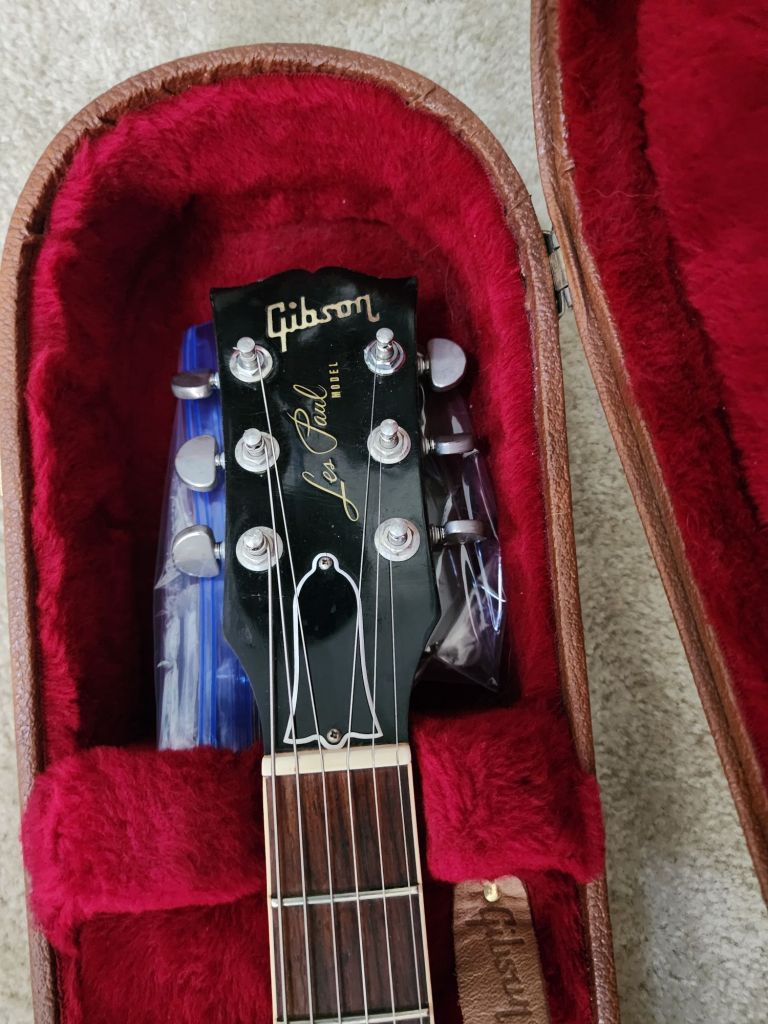
Today I had the pleasure of working on a 1990 Gibson Les Paul Standard guitar. This was a very early 1990 example with the original Bill Lawrence circuit board style pickups with 4 conductor wiring! It came in needing a lot of work.
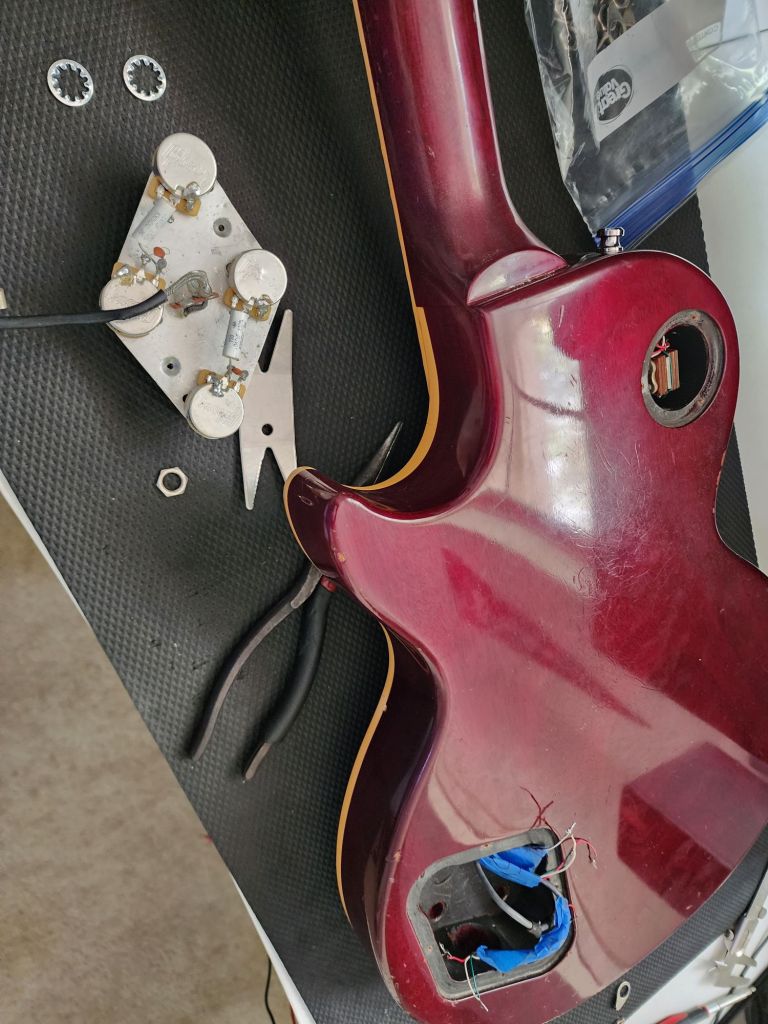
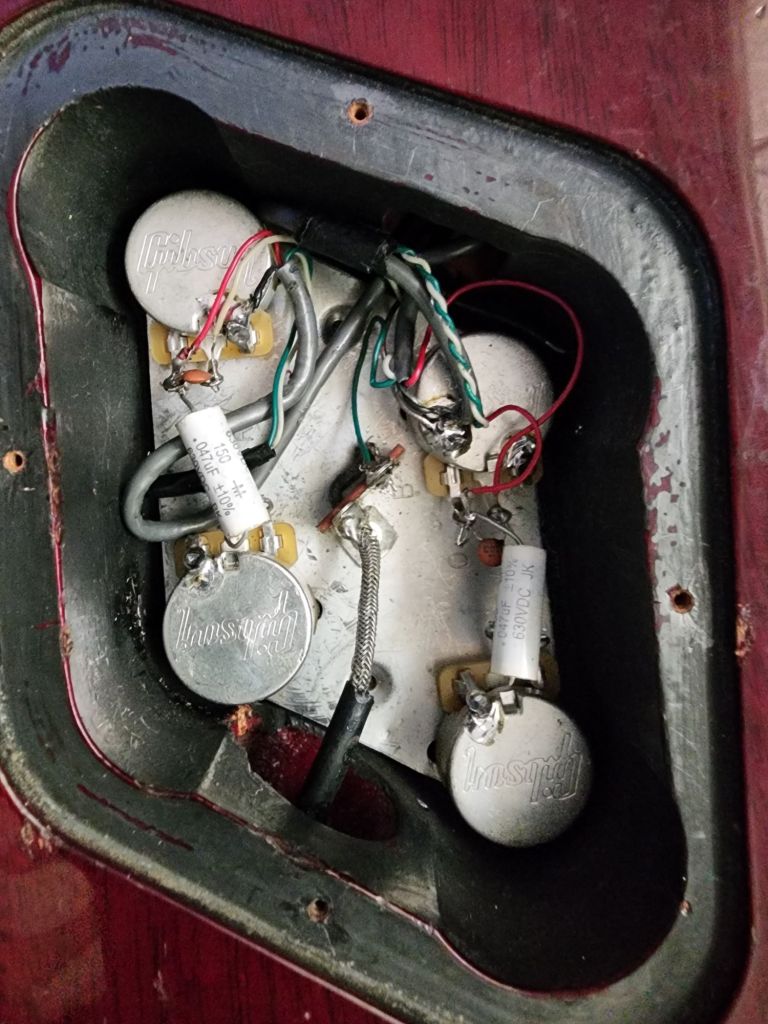
The guitar needed all of its electronics re-wired and a potentiometer replaced. On top of this, the guitar’s potentiometers were not fitting properly in the guitar, and the nuts could not secure the potentiometers to the top of the body. Once I ripped out all of the electronics, I carefully determined which potentiometer, or potentiometers needed replacement or repair. One potentiometer I was able to repair by taking it apart and bending the housing back into shape. Another one was no so lucky and had to be replaced. Once I ensured that the potentiometers are working correctly and are fitting within the guitar body correctly, I went ahead and began to solder everything back up. I was careful to make sure that everything was grounded properly with my continuity tester and that all the solder joints were solid. I also made sure the toggle switch solder joints were solid as well. Once everything was sured up, I plugged her in and heard the amazing Bill Lawrence designed Circuit Board pickups for the first time. They sounded killer!
After the electronics were fixed, I moved on to setting up the guitar. The client told me that he likes low action and usually when his guitar was set up, it was buzzy past the 12th fret on bends. I checked the guitar for high frets using a fret rocker and found that there were a few uneven frets but nothing to be very concerned about. With the frets not being an issue, I took to the truss rod, and saw that the neck was back bow, a condition where the truss rod is too tight, resulting in the middle of the guitar neck being too close to the strings. Ideally, a guitar should have a bit of forward bow, or relief in the neck. Not too much, but an ever so slight amount. This allows the strings to vibrate without buzz. I adjusted the neck back into spec and then focused on the action.
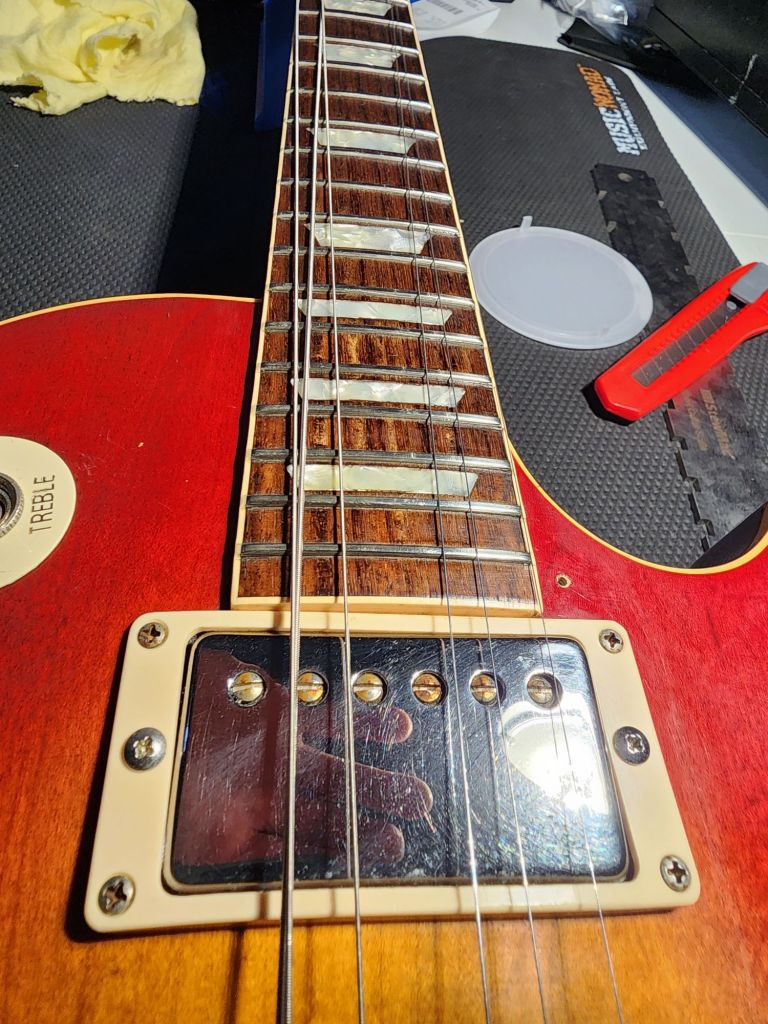
The action was set using the saddle thumbwheels and I was able to get the guitar playing at 3.5/64ths of an inch on the treble side and 4/64ths of an inch on the bass side. overall, this made the action extremely comfortable to play. I make sure to check for buzzing by performing 1 1/2 step bends throughout the neck. If there is buzzing while bending, it is sure to show here. The one thing I noticed is there are some impressions on the frets of the guitar, where the G string lays. The G string must have been knocked into the frets hard, resulting in an indentation on the middle frets (9th – 14th fret). This could not be removed during a routine fret polished. I notified the client of this, and suggested a fret level, crown, polish to remove these imperfections but due to no other major playability issues, this was declined.
Once I finished with the action, I went ahead and intonated the instrument and then it was off to the hands of a very happy guitarist!
Overall, this was a very fun and rewarding repair, bringing this old guitar back to life from the closet!
Leave a comment